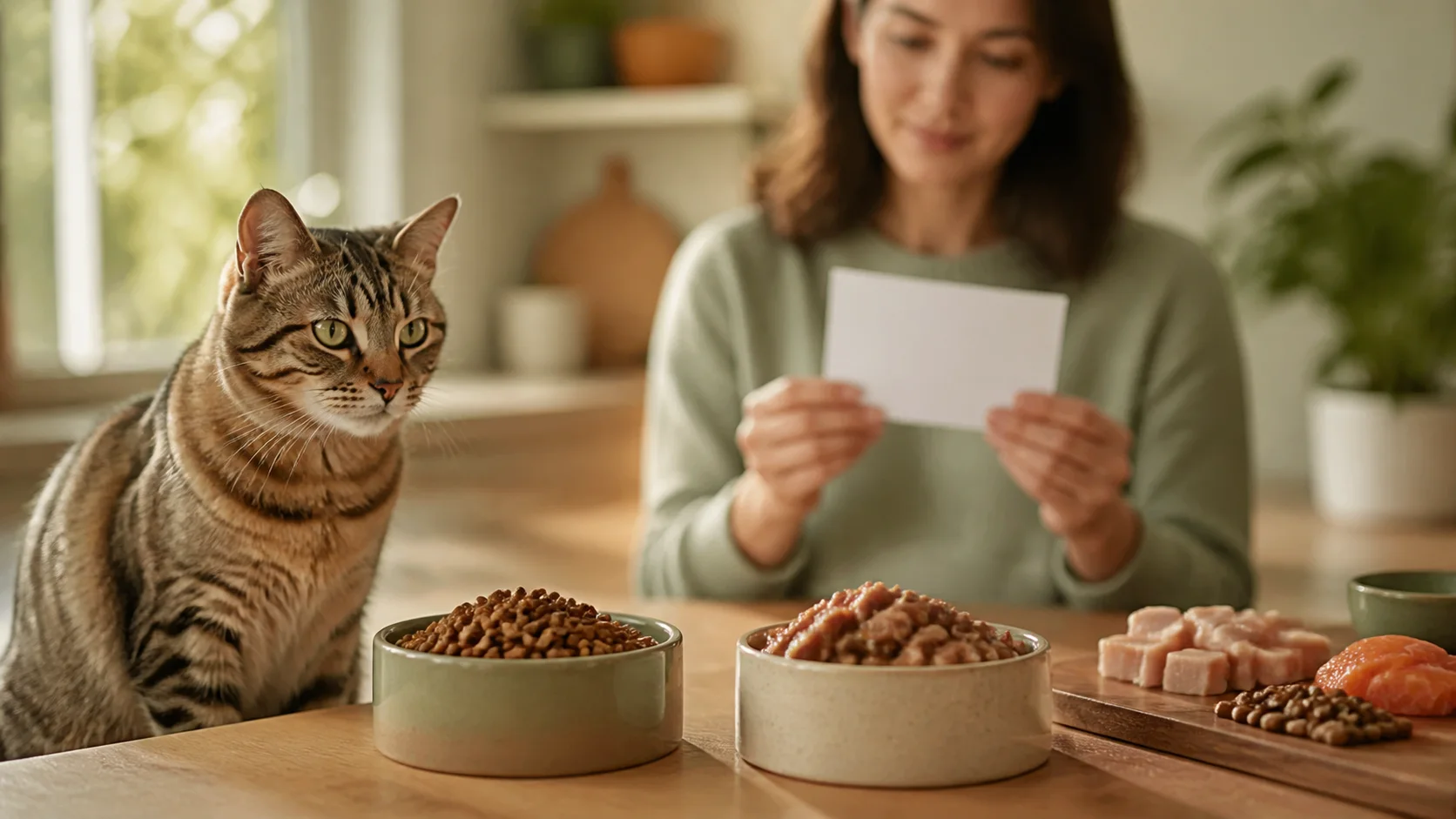
Wet vs Dry Cat Food: Differences, Benefits, and Effects
Compare wet and dry cat food by moisture, calorie density, feeding behavior, storage, dental care, and possible effects on daily health management.
Quick answer
What this guide covers
Wet and dry cat food differ in moisture, energy density, texture, storage, and feeding management. Neither format is automatically right for every cat.
Key takeaways
- Wet food usually provides much more water in the meal. Dry food provides little water, so drinking matters more.
- Wet food usually contains fewer calories by weight because water adds weight. Dry food is usually more concentrated.
- Wet food is soft and often strongly scented. Dry food has a firm texture and variable piece size.

Article content
Wet and dry cat food are different formats with different practical effects. The choice changes how much water and energy arrive in a bowl, how food is stored, how portions are measured, and how a cat responds to texture and smell.
The format does not decide whether a diet is complete. Check the nutritional adequacy statement first, then look at calories, life stage, health needs, and the cat’s feeding behavior.
The main differences at a glance
- Wet food usually provides much more water in the meal. Dry food provides little water, so drinking matters more.
- Wet food usually contains fewer calories by weight because water adds weight. Dry food is usually more concentrated.
- Wet food is soft and often strongly scented. Dry food has a firm texture and variable piece size.
- Opened wet food usually needs prompt refrigeration. Dry food needs a cool, dry, sealed storage place.
- Wet food benefits from weighing or calorie calculations. Dry food is practical to measure with a scale or measured scoop.
- Neither format provides a complete dental-care plan. Ordinary dry food does not replace oral care.
Moisture changes water intake
Cornell’s feline health guidance describes wet food as commonly containing about 70 to 80 percent water, while dry food is commonly around 6 to 10 percent. The exact number depends on the formulation and the label.
A cat eating wet food may drink less from a bowl because more water arrives with the meal. A cat eating dry food usually gets more of its daily water by drinking. Both patterns can be normal when hydration is adequate and the cat’s health is stable.
Fresh water should remain available with either format. A sudden increase or decrease in drinking, urination, appetite, or litter-box use deserves attention. Wet food can increase water intake, yet it does not treat every urinary, kidney, or metabolic problem. A diagnosed condition needs a veterinary plan.
Compare calories rather than bowl size
Water adds weight without adding calories. A large portion of wet food can contain fewer calories than a much smaller weight of dry food. A scoop of dry food and a can or pouch of wet food therefore cannot be compared by volume alone.
Use the calorie statement and the actual amount fed. When combining wet and dry food, assign each format a portion of the daily calorie budget. Adding a full wet-food serving to a full dry-food serving can cause gradual overfeeding even when both foods are individually complete.
For nutrient comparisons, moisture also changes the printed percentages. A rough dry-matter calculation is useful.
Dry-matter nutrient percentage = as-fed nutrient percentage ÷ (100 − moisture percentage) × 100
This calculation helps compare protein or fat percentages across formats. It does not replace the calorie statement or a veterinary diet plan.
Texture and smell affect eating behavior
Wet food is soft and often has a stronger aroma. Those features may help a cat that prefers a particular texture or has a reduced appetite, although a sudden appetite change can signal illness. Dry food is easy to portion and can be practical for structured meals, food puzzles, or households that need a food that stays stable for a limited period.
Cats can be very specific about texture. One cat may accept a smooth loaf and reject chunks. Another may prefer small dry pieces. Temperature, bowl shape, location, other animals, and feeding schedule can also affect whether a cat eats.
If a cat is changing food, introduce one change at a time and keep the old food available during a gradual transition when possible. A cat that stops eating should receive prompt veterinary advice. Waiting for hunger to force acceptance is unsafe for cats.
Dental care needs more than crunch
Ordinary dry food should not be described as a complete dental-care routine. Some specifically tested dental diets can help with plaque or tartar claims, yet the evidence belongs to the tested product and feeding method. The texture of every dry food does not produce the same effect.
Wet food does not automatically cause dental disease. Plaque control, home care, individual risk, and veterinary examinations matter more than the wet or dry label alone. Ask a veterinarian how to build an oral-care plan for a cat with pain, bad breath, red gums, or difficulty chewing.
Storage and hygiene differ
Opened wet food should follow the package storage directions and should be refrigerated promptly when required. Serve a reasonable portion and remove leftovers before they sit warm for a long time. Wash the bowl regularly.
Dry food should be protected from heat, moisture, air, and pests. Keep it in its original packaging or in a clean sealed container that can be washed and dried. A large container that stays open for months can allow freshness and traceability to decline.
Digestive effects come from more than moisture
Stool changes can follow a format change, yet moisture is only one variable. Fiber, fat, ingredients, calorie intake, eating speed, and the size of the transition can all affect stool volume and firmness.
Record the food amount, treats, appetite, stool, vomiting, and weight during a change. Persistent diarrhea, repeated vomiting, weight loss, pain, or refusal to eat needs veterinary advice. Do not use a wet-to-dry or dry-to-wet switch as a substitute for investigating disease.
Can a cat eat both formats
Many healthy cats can eat a combination when both foods are complete for the intended life stage and the total daily amount is measured. Combination feeding can provide texture variety, add water, and make a gradual transition easier. It can also hide extra calories, so portions need to be written down.
The practical decision is the one that supplies complete nutrition, keeps calories appropriate, supports adequate water intake, and works with the cat’s behavior and the household’s storage routine.
Sources
Author information

Written by
Emma Rowan
Pet nutrition education editor
A fictional editorial profile focused on feline nutrition, hydration, and practical food education.
Areas of focus
- cat nutrition
- wet and dry food
- hydration
- weight management
Profile note: Fictional profile. No real license, institution, or professional credential is claimed.

Reviewed by
Julian Reed
Pet health fact-checking editor
Areas of focus
- fact checking
- risk language
- health claims
- editorial review