Can GPT-6 Diagnose a Dog or Cat? What AI Can and Cannot Tell You
Learn what GPT-6 can organize about a dog or cat health concern, why it cannot replace veterinary diagnosis, and when to contact a professional.
Quick answer
What this guide covers
GPT-6 can help organize observations and prepare questions, but a chat or image response is not a veterinary diagnosis or emergency service.
Key takeaways
- When an observation began
- How often it occurred
- What happened before and after it

Article content
No. GPT-6 can help organize a pet concern, explain general information, and prepare questions for a veterinarian, but a chat or image response is not a veterinary diagnosis. The model has not examined your pet, reviewed the complete history, or performed the tests that may be needed to understand a health problem.
The safer way to use AI is to keep three layers separate: what you observed, how the information is organized, and what a qualified professional concludes.
What diagnosis requires that a chat does not have
A pet-health question often begins with an ordinary observation: a dog is quieter, a cat is scratching, or a pet is eating differently. The same visible change can have different explanations, and the meaning depends on context such as age, previous history, medications, environment, and progression.
A general AI conversation can help you describe the observation. It cannot independently verify whether the description is accurate, assess your pet in person, or perform a physical examination. It may produce a plausible list of explanations, but plausibility is not confirmation.
AAHA’s client guidance makes the distinction directly: AI can help pet owners research questions before an appointment, while the veterinarian should diagnose the dog. The organization’s connected-care guidance also describes AI and remote monitoring as information that can support veterinary work when used with the patient’s history and professional judgment.
What text and images can document
AI is more useful when you ask it to preserve information rather than name a disease.
You can use text to organize:
- When an observation began
- How often it occurred
- What happened before and after it
- Food, water, elimination, activity, and sleep notes
- Recent changes in routine or environment
- Questions you want to remember at an appointment
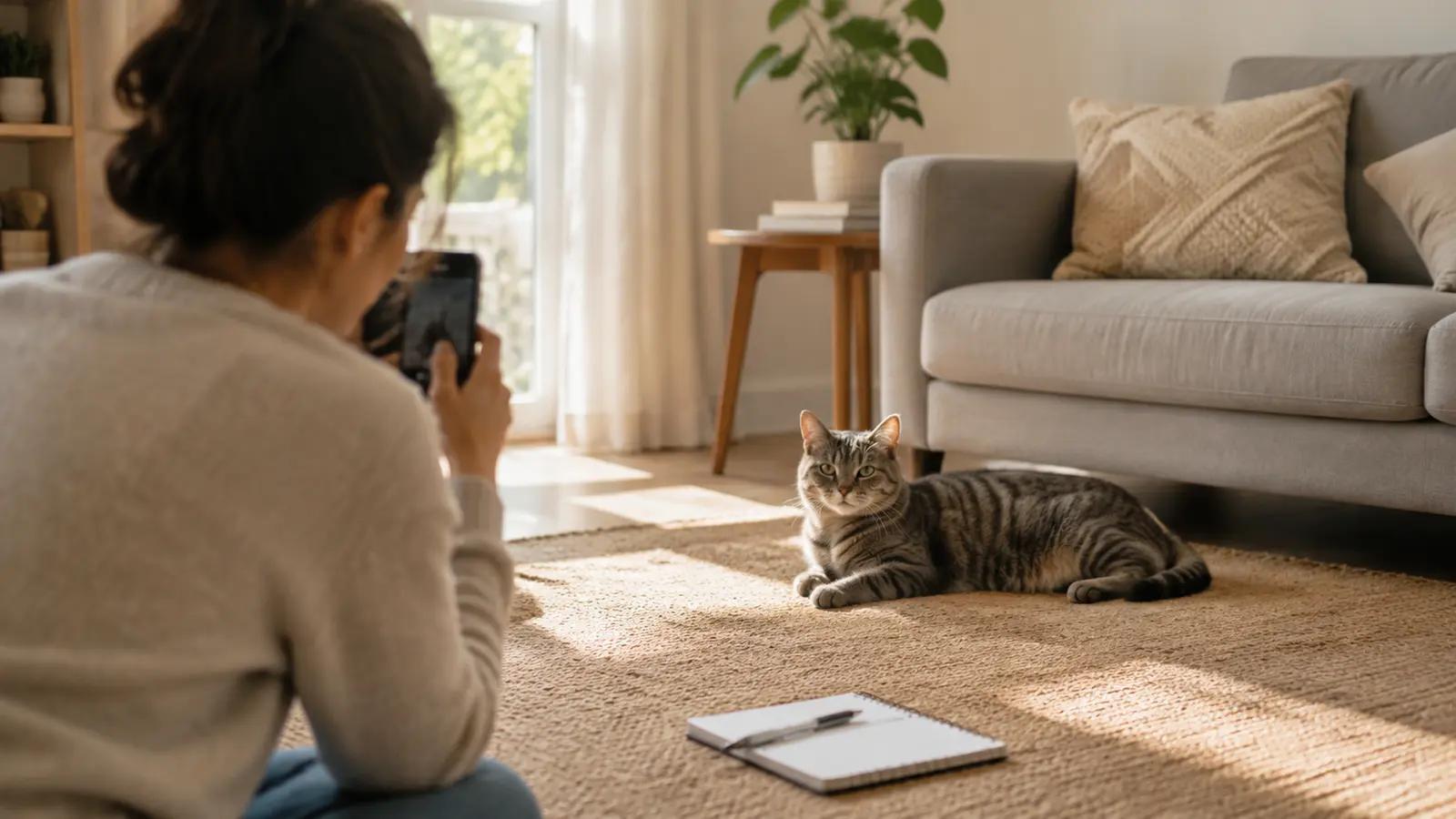
You can use dated images to document a visible appearance or change over time. Keep the original image and record the light, angle, distance, and date. A single image cannot show duration, pain, internal findings, or everything happening outside the frame.
Ask GPT-6 to describe what appears visible and to list what cannot be assessed. Do not ask it to confirm a disease, rate the seriousness of a wound, or recommend a medication based on a photo.
Ask for facts, unknowns, and questions
Use a bounded prompt like this:
```text I am recording an observation about my [dog/cat].
Pet context: [species, age, relevant history] Date and time: [when] Direct observations: [what I saw, heard, measured, or recorded] Images or other evidence: [describe what is attached]
Please:
- Separate direct observations from possible interpretations.
- List information that is missing or uncertain.
- Create questions I can discuss with a qualified veterinarian.
- State clearly what cannot be assessed from this information.
Do not diagnose, prescribe, recommend a dose, or tell me to delay professional care. ```
This request makes the model a preparation assistant. It does not ask the model to act as a veterinarian, and it keeps uncertainty visible.
Know when to stop the AI conversation
Do not keep refining a prompt if you think your pet may need urgent help. Contact your veterinarian, an emergency animal hospital, or an animal poison control center as appropriate. FDA guidance specifically directs pet owners to those services for veterinary advice in an emergency, including possible exposure to dangerous substances.
If you can do so without delaying contact, preserve the basic facts: what happened, when it happened, what your pet may have eaten or touched, and what you are seeing now. Do not wait to take a perfect photo or complete a timeline before calling.
The right response to an urgent concern is a professional contact, not a second AI opinion. Local emergency pathways differ, so use the services available in your area.
Bring preparation material to the veterinary conversation
If GPT-6 helped you prepare, bring:
- The original dated notes
- The original photos or videos
- A list of food, treats, medicines, and supplements
- A short timeline of what changed
- The questions generated or refined with AI
Tell the veterinary team that AI helped organize the material. If a sentence sounds like a diagnosis, rewrite or remove it. The professional should see the source information, not only an AI conclusion.
A facts, inferences, and unknowns worksheet
```text Direct observation
- What I saw, heard, measured, or recorded:
Possible interpretation
- What I wondered about, clearly labeled as a question:
Unknown
- What I did not measure or cannot confirm:
Timeline
- Date and time of the first observation:
- What changed afterward:
Question for the veterinarian
- What would you like the professional to assess or explain?
```
The worksheet is deliberately plain. It reduces the chance that a polished model response will replace the underlying record.
Frequently asked questions
Can GPT-6 read a pet’s X-ray or skin photo?
GPT-6 Astra supports image input, but accepting an image is not the same as providing a veterinary diagnosis. Use an image to preserve a visible observation and prepare a question. Let a qualified professional interpret it.
Is an AI symptom checker safe for emergencies?
Do not use a general AI symptom checker as the first step in an emergency. Contact the appropriate veterinary service directly. AI can help organize information later if doing so does not delay care.
Should I trust a second AI opinion?
No AI response should be treated as confirmation of a diagnosis. If the issue matters to your pet’s health or safety, return to the original observations and involve a qualified professional.
What if the AI answer conflicts with what I see?
Trust the direct observation as the record of what you saw, not as proof of a cause. Preserve both, label the model’s statement as an interpretation, and ask a veterinarian what the difference means.
The practical takeaway
GPT-6 can help a pet owner prepare a better question, a clearer timeline, or a more complete record. It cannot examine a dog or cat and should not be used to diagnose, prescribe, or decide whether urgent veterinary care can wait.
For broader context, see AI Pet Tools in 2026. For appointment preparation, see How to Prepare Health Notes for a Vet Visit. The GPT-6 workflow page in this content cluster can be linked here after it is reviewed and published.
BetterHealth provides general pet wellness education and tools for organizing pet profiles, observations, and care notes. It does not provide veterinary diagnosis or treatment and should not be used for emergencies.
Sources
Author information

Written by
Julian Reed
Pet health fact-checking editor
A fictional editorial profile focused on source checking, risk language, health claims, and safe educational boundaries.
Areas of focus
- fact checking
- risk language
- health claims
- editorial review
Profile note: Fictional profile. No real license, institution, or professional credential is claimed.
Reviewed by
Julian Reed
Pet health fact-checking editor
Areas of focus
- fact checking
- risk language
- health claims
- editorial review