New Pet Technology in 2026: What Is Useful and What Is Experimental
Evaluate new pet technology in 2026 by the problem it solves, the record it creates, the evidence behind its claims, and the maintenance it requires.
Quick answer
What this guide covers
New pet tools are worth considering when they create a reliable record for a real care problem. Use this checklist to separate practical help from interesting experiments.
Key takeaways
- [AAHA: Remote Monitoring and Artificial Intelligence](https://www.aaha.org/resources/2021-aaha-avma-telehealth-guidelines-for-small-animal-practice/remote-monitoring-artificial-intelligence/)
- [Tractive: What health features does Tractive track?](https://help.tractive.com/hc/en-us/articles/360011024119-What-health-features-does-Tractive-track)
- [Tractive: Health Alerts](https://help.tractive.com/hc/en-us/articles/13362814092562-Health-Alerts-How-To-Guide)
Article content
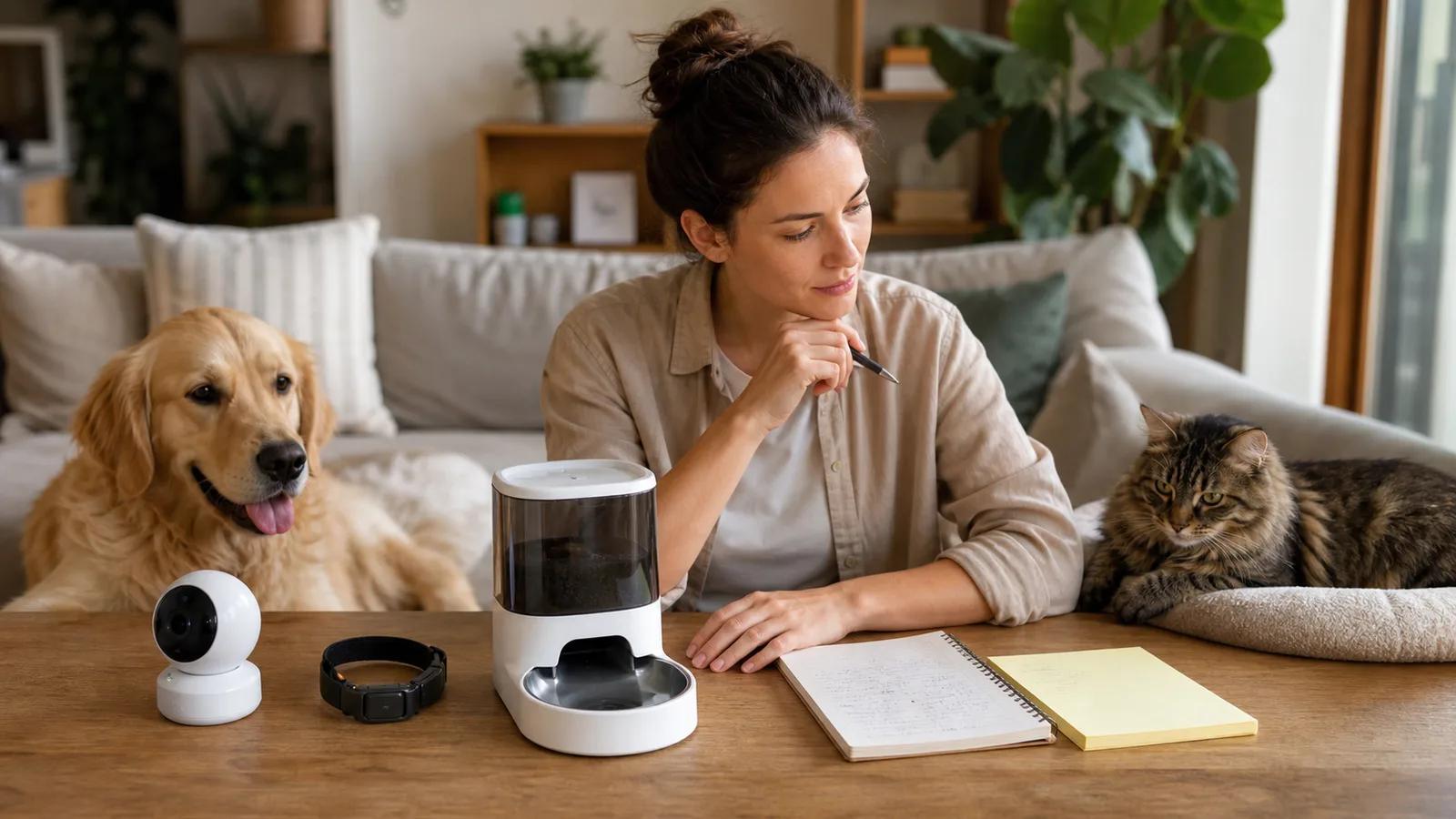
The newest pet technology is not automatically the most useful. A mature microchip feeder may solve a household’s feeding problem better than an experimental AI interpretation app. A simple camera clip may be more useful than a dashboard full of alerts. The right test is whether a tool creates a reliable record for a real care decision.
New products also change quickly. Features, subscriptions, compatible devices, coverage, and data policies can change after an article is published. Treat product pages as the source for current specifications and treat this article as a decision framework, not a permanent ranking.
Use five tests before buying
1. What question does it answer?
Write the question in one sentence. Which cat ate? Did the dog leave the safe area? What happens when the household is away? Did a repeated routine change? If the answer is only “I want more data,” wait until the household can name the decision the data will support.
2. What does it record directly?
Separate a measurement or event from an interpretation. A camera can record a clip. A feeder can record access under its own conditions. A tracker can record location or a trend. An app may classify the event. The classification is not the same as the underlying observation.
3. What creates gaps?
Check battery, network, placement, lighting, fit, pet identity, subscription, cleaning, and manual review. A product that works only when the pet tolerates it and the household maintains it may still be useful, but those conditions should be visible before purchase.
4. Can the record be shared?
Look for export, history, timestamps, and a way to share the original context. A screenshot without a date, device status, or surrounding observation is a weak handoff.
5. What claim is the product making?
Do not confuse “can flag a pattern” with “can diagnose a condition.” AAHA describes remote monitoring and AI as tools that may provide information for veterinary teams. Product support pages also state their limits. Keep those boundaries in the article and in the household’s expectations.
Practical tools that create useful records
GPS and wellness wearables
Tractive currently describes GPS, virtual fences, activity, sleep, and several health-monitoring features for compatible trackers. Health-alert documentation says the service is not a medical device and relies on consistent data and a personal baseline.
These tools are practical when location or long-term trend is the missing information. Check model compatibility, pet type, fit, battery, cellular coverage, subscription, and whether the device can be worn consistently. Compare the pet with its own routine before using any population comparison.
Cameras with event alerts
Petcube and Furbo describe alerts for pet, person, barking, meowing, and movement events. A camera is useful when the question is tied to a visible place: a door, feeding area, room transition, or space used after departure.
The product is only as good as its view and the household’s review habit. Place it where the event occurs, review the clip, mark false alerts, and record outside sounds or visitors. A label cannot explain motivation or medical cause.
Smart litter systems
Whisker says Litter-Robot 4 can provide visit and weight insights in the Whisker app. This can make a repeated routine easier to review, especially in homes that struggle to know which cat used the box.
Check cat identification, floor conditions, calibration, access, cleaning, and the exact history included in the service. The system creates an observation record; it does not explain why the pattern changed.
Individual feeding systems
Sure Petcare describes a Microchip Pet Feeder Connect that recognises a pet’s microchip or RFID tag and records feeding information. This is a practical category when multiple pets share a home and the missing fact is access.
Test every pet, keep alternative resources calm and available, and remember that access is not identical to consumption. A written log may still be enough for a one-pet, one-caregiver household.
Tools that need extra caution
Vocalisation and sound-button apps
MeowTalk describes broad AI-supported interpretations of cat vocalisations, while FluentPet describes connected buttons and logged associations. These tools can support enrichment and observation. They should not be presented as literal translators or as systems that prove emotion, pain, or illness.
Keep the recording, time, location, posture, and response. Evaluate the repeated association, not the most confident-sounding label.
Digital identity services
Petnow describes AI-assisted identity tools for dogs and cats. A digital identity can supplement a recovery plan, but it does not replace a microchip record, current contact information, local registration, or an easy route for a finder to reach the owner.
Check what information is public, how matches are reviewed, and how the profile is updated.
Body-condition and “health score” products
Products that turn an image or sensor stream into a body or wellness score deserve a higher evidence bar. Ask what was validated, on which animals, under what conditions, and what the score is intended to do. A score cannot replace a physical examination or a professional body-condition assessment.
A safer first-week test
Before making a new tool part of daily care, run a short test:
- Write the care question and the expected useful record.
- Record the pet’s normal routine without changing several other things.
- Check fit, battery, network, placement, and identity.
- Compare device events with what a person actually saw.
- Mark false alerts and missing data.
- Decide whether the device reduced uncertainty or only added notifications.
If the tool is used around a health concern, save the original timeline and ask the veterinary team how they want it shared. Do not change medication, food, exercise, or treatment because a new product produced a score.
Frequently asked questions
Are unusual pet tools worth buying?
Sometimes. Buy when the tool solves a defined problem, creates a record you will review, and has limitations that fit the household. Novelty alone is not a benefit.
Are smart pet tools medical devices?
Not automatically. Some products explicitly state that they are not medical devices. Read the product’s intended use and keep detection, interpretation, and diagnosis separate.
Should one tool track everything?
Usually no. A narrow tool with dependable data may be easier to maintain and interpret than an all-in-one system with many unused features.
Do new tools work for both cats and dogs?
Only when the product says they do and the fit, feature set, and environment are suitable. Check pet type and model compatibility rather than relying on a general marketing claim.
Sources
Author information

Written by
Clara Bennett
Pet food safety editor
A fictional editorial profile focused on storage, food hygiene, opened-food handling, and feeding safety.
Areas of focus
- food storage
- food hygiene
- opened-food handling
- feeding safety
Profile note: Fictional profile. No real license, institution, or professional credential is claimed.

Reviewed by
Julian Reed
Pet health fact-checking editor
Areas of focus
- fact checking
- risk language
- health claims
- editorial review