Do Cat Breeds Need Different AI Pet Tools? A Fit-by-Need Guide
Learn how to choose cat technology by the individual cat’s size, coat, routine, household, and care question instead of assuming a breed needs a specific AI tool.
Quick answer
What this guide covers
Breed information can help you check fit, but it cannot choose a device for every cat. Start with the individual routine, then test the setup safely.
Key takeaways
- The cat’s current weight and the device’s stated range.
- Entry, collar, bowl, or resting dimensions.
- Indoor or outdoor routine.

Article content
Cat breeds do not come with a single correct AI pet tool. A breed standard may describe appearance or general type, but it does not predict one cat’s appetite, activity, tolerance for a collar, litter routine, or home environment. The individual cat and the household question should lead the decision.
Breed information can still help with practical fit. A large cat may need a larger entrance or a higher device weight limit. A long coat may affect camera recognition or wearable placement. A vocal cat may make an audio log interesting. These are checks, not diagnoses or guarantees.
Start with the individual cat
Write down the problem before looking at a breed label. Do you need to identify which cat used a feeder? Record visits to a litter system? See what happens when the household is away? Support outdoor recovery? Each question points to a different record.
TICA’s breed standards describe recognised breed characteristics, but the standard is not an individual health or behavior baseline. Use it only to identify physical constraints that need checking. Then observe the cat’s actual size, routine, environment, and tolerance for equipment.
Check size before choosing a feeder or litter system
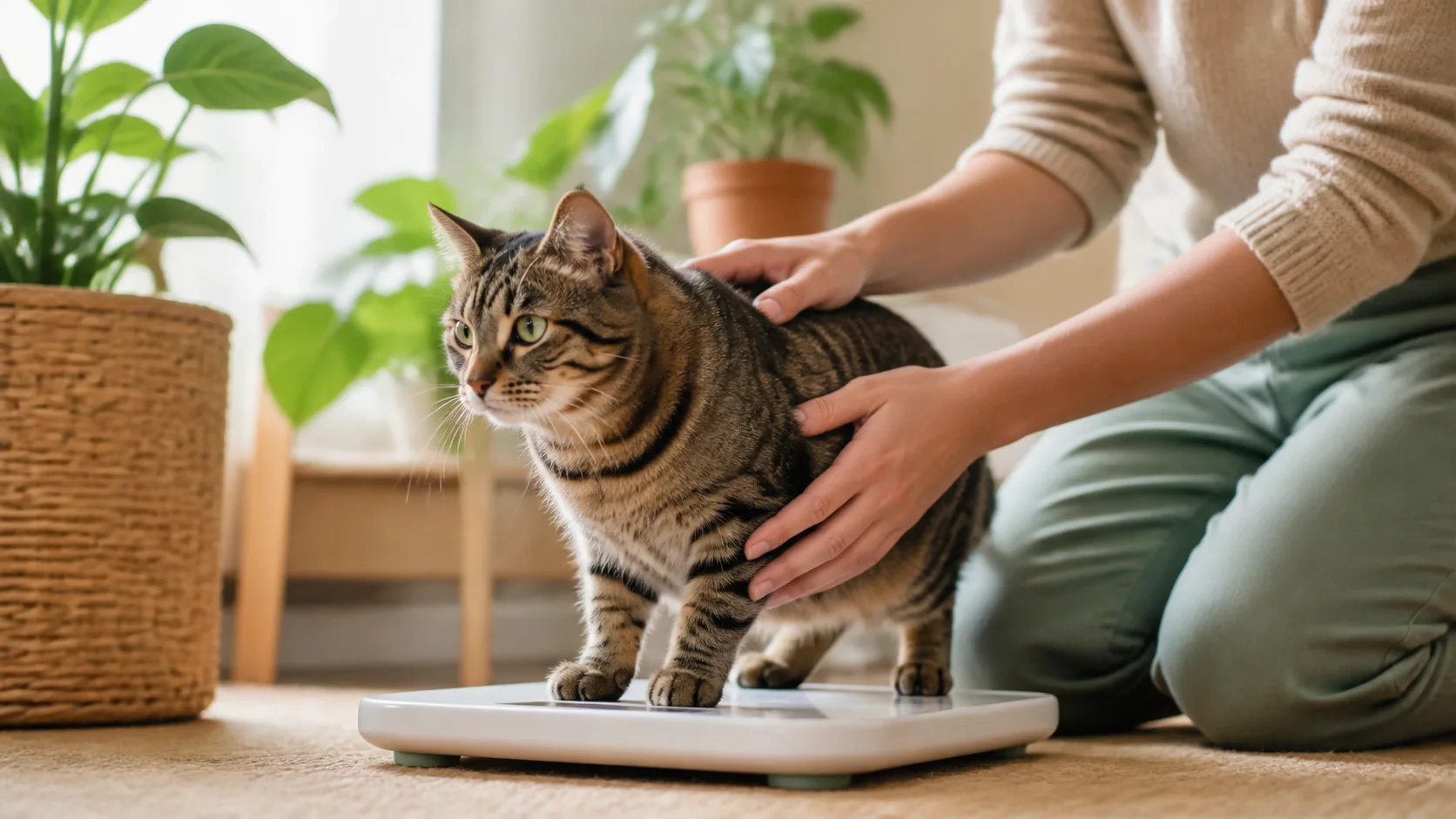
A larger cat may need more interior room, a wider entrance, or a stronger scale range. A smaller cat may not reliably trigger or fit a device designed for larger animals. Check the manufacturer’s measurements and weight guidance rather than assuming that “cat-sized” means suitable.
Whisker describes Litter-Robot 4 as supporting visit and weight insights in its app, with features affected by the product setup and service level. If you use a connected litter system, check the floor, calibration, access route, and whether the cat enters alone. A trend is useful only when the device can record the individual cat consistently.
For feeding, a microchip or RFID feeder can help in a multi-cat home. Sure Petcare describes individual access and feeding records for its Microchip Pet Feeder Connect. Test recognition with every cat and make sure the setup does not block water, alternative resources, or a calm exit.
Check coat, face, and device placement
Long hair can change how a camera sees a face or how a wearable rests against the body. If you use camera-based identity or a tracker, test the device in normal lighting and during ordinary movement. Do not treat a missed recognition event as proof that the cat was absent.
Place cameras where the behavior you care about actually occurs. A doorway, feeding area, or room transition may be more useful than a close-up view of the cat’s face. Review clips and record false alerts, especially in homes with multiple cats or changing light.
Use vocalisation tools as observation, not translation
Some cats are more vocal in a particular home, while others communicate mostly through movement and routine. MeowTalk describes general AI-supported interpretations of cat vocalisations. That can be an enrichment prompt, but it is not a literal translation and does not establish emotional or medical meaning.
Keep the original sound with its time, location, posture, nearby people or animals, and what happened afterward. A change in vocal routine matters most when considered beside appetite, litter use, movement, grooming, and sleep.
Compare common cat types without making promises
Short-haired domestic cats
There is no single domestic-shorthair profile. Start with an individual feeding, litter, and weight record. In a multi-cat home, identity and access may matter more than an activity score.
Large or heavy-built cats
Check weight limits, entrance dimensions, and the stability of feeders, scales, and litter systems. Introduce new equipment gradually. A device that changes access or makes the cat avoid a resource is not a useful monitoring system.
Long-haired cats
Check whether coat length affects camera visibility, collar fit, grooming, and cleaning. Use a manual observation route when a device cannot see or identify the cat reliably.
Highly vocal cats
An audio-enabled camera or sound log may help you notice timing and context. Keep interpretation cautious and preserve the original recording.
Active or outdoor cats
Location and recovery planning may matter more than indoor activity dashboards. Check fit, safety design, battery, and cellular coverage. Keep ordinary identification and current contact details in place.
These are setup prompts, not breed rules. Age, health history, temperament, household design, and personal preference may matter more than the label.
A fit-by-need buying checklist
Before buying, record:
- The cat’s current weight and the device’s stated range.
- Entry, collar, bowl, or resting dimensions.
- Indoor or outdoor routine.
- Number of cats and whether the device distinguishes them.
- Coat and lighting conditions for camera or identity tools.
- Battery, network, subscription, export, and privacy requirements.
- How the cat reacts to noise, collars, new bowls, and changed routes.
Start with one device and one question. Keep a parallel human note for the first week so you can spot gaps. If the device creates more false alerts than useful information, change the setup or return to a simpler log.
Frequently asked questions
Which AI tool is best for a specific cat breed?
There is no universal breed-to-tool match. Choose by the individual cat’s care question, physical fit, routine, and tolerance. Use breed information only as a prompt to check practical constraints.
Are breed-based cat activity comparisons reliable?
They are context, not a target. Age, size, environment, weather, health, and the cat’s own baseline affect activity. A comparison cannot decide whether a change needs attention.
Can facial recognition identify every cat accurately?
No. Lighting, angle, movement, coat, multiple pets, and the system’s training affect recognition. Check important events with a human observation and do not treat a missing match as proof that nothing happened.
Is a smart litter box necessary for a single cat?
No. A consistent manual log may be enough. A connected system is worth considering when the household needs history, has difficulty observing visits, or needs data to share with a professional.
Sources
Author information

Written by
Mei Lin
Feline health content author
A fictional editorial profile focused on cat hydration, appetite changes, digestion, and daily care observations.
Areas of focus
- cat hydration
- appetite changes
- digestion
- daily care
Profile note: Fictional profile. No real license, institution, or professional credential is claimed.

Reviewed by
Julian Reed
Pet health fact-checking editor
Areas of focus
- fact checking
- risk language
- health claims
- editorial review